Royal Commission on Antisemitism and Social Cohesion

Established on 9 January 2026 by the Australian Government in response to the antisemitic terrorist attack at Bondi Beach on 14 December 2025.

The Commission is led by former High Court Justice, the Hon. Virginia Bell AC.

The Commission has been asked to examine the nature and prevalence of antisemitism in Australia, the circumstances that led to the Bondi attack, and to make recommendations to strengthen social cohesion and improve the response of government, law enforcement, and other institutions.

See the full Terms of Reference of the Commission here

The Commission is inviting members of the public and institutions to make submissions about their experiences of antisemitism and its impacts.

Instructions on how to make a submission can be found here


Sharing lived experience is one of the most important ways the Royal Commission can understand the real impact of antisemitism in Australia today

The most effective submissions are those written in your own words, reflecting the authentic experience of the Jewish community.

In your submission, you may wish to include:

  • When and where the incident or pattern occurred;
  • Which institution or setting was involved (ie school, university, workplace, online, communal space);
  • What happened – in your own words;
  • How did it make you, and others around you, feel at the time of occurred and afterward;
  • Any further impacts antisemitism has had on your safety, wellbeing, state-of-mind, education, career, family etc;
  • Any steps your or others took in response, and what if anything changed as a result;
  • Any suggestions or recommendations as to how the situation could have been handled different or how the situation could have been improved.
  • You can also attach or refer to supporting materials such as emails, letters, screenshots, reports, complaints or images if you have them.

Every authentic submission, no matter how ‘small’ it may feel, helps paint an honest picture of antisemitism in Australia.

Prompts to help you think about your story

What matters is that you share experiences that feel important to you, in your own words. You might like to reflect on:

  • Moments or incidents that have stayed with you over time
  • Words, behaviours or actions that made you feel unsafe, singled out or excluded
  • Patterns you have noticed in a particular place or setting (ie school, university, workplace or online space)
  • How these experiences have affected your day to day life, relationships, study, work or sense of safety
How to make a submission

Direct submissions to the Royal Commission can be made online via the Commission’s website

The Commission will continue to accept submissions until at least the end of May 2026.

About ShareYourStory

ShareYourStory has been created by Jewish peak bodies, including the ZFA, to stand alongside the community throughout the Royal Commission on Antisemitism and Social Cohesion. Its role is to provide clear, trusted information and practical tools so that individuals and organisations can share their experiences in a way that feels safe, authentic and manageable. ShareYourStory works through existing communal structures so that information reaches people from sources they already know and trust.

A dedicated ShareYourStory website is now live and will be regularly updated with new guidance, resources and events as the Royal Commission progresses.

Frequently Asked Questions

What is a Royal Commission?

A Royal Commission is the highest form of independent public inquiry in Australia. It is reserved for matters of national importance and has broad powers to gather evidence, hear from witnesses and make recommendations to government.

For more information see the Royal Commission webpage or the Arnold Bloch and Leibler Royal Commission page.


How long will this Royal Commission run?

The Royal Commission will accept submissions until at least the end of May 2026. It is required to deliver an interim report by 30 April 2026 and a final report by 14 December 2026.

Will my submission be made public?

The Royal Commission has indicated that it may publish some submissions, but only with consent of the individual or organisation, and subject to confidentiality and safety considerations. Further detail is available on the Commission’s website.

If you are unsure about safety, anonymity or publication, you may wish to seek advice before lodging your submission. Please contact info@shareyourstory.org.au if you would like to discuss this.
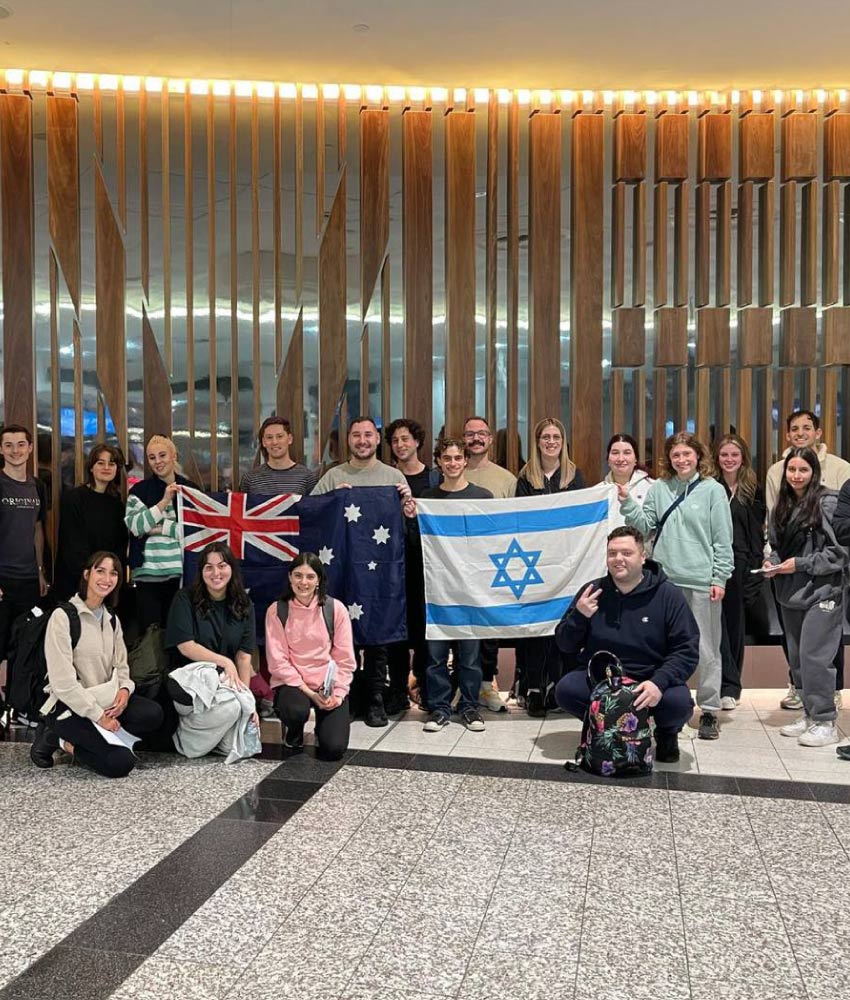
Dolore magna aliquam volutpat

Ut wisi enim ad minim veniam, quis nostrud exerci tation ullamcorper suscipit. Lobortis nisl ut aliquip ex ea commodo consequat. Duis autem vel eum iriure dolor in hendrerit in vulputate velit esse molestie consequat.

  • Aliquip ex ea commodo consequat
  • Duis autem vel eum iriure dolor
  • Aliquip ex ea commodo consequat
  • Duis autem vel eum iriure dolor

Our History

Nearly a century of representing, advocating and connecting

The Beginning

On 19–20 September 1927, a national Zionist conference was held at Melbourne’s Windsor Hotel, chaired by Rabbi Brodie. At a time when the Australian Jewish community numbered just 27,000, delegates unanimously voted to establish the Australian Zionist Federation. Rabbi Brodie was elected President, and General Sir John Monash was appointed Honorary first President.

Sir John Monash’s funeral in 1931 drew an estimated 250,000 people — half of Melbourne’s population — who lined the streets in silent tribute. The city came to a standstill as Monash, Australia’s greatest WWI commander and a proud Jewish leader, was farewelled with full military honours. Thousands of returned soldiers marched in the procession, while civic and religious leaders joined a deeply symbolic farewell led by Rabbi Jacob Danglow. The scale and solemnity of the event reflected Monash’s extraordinary impact on Australian public life.

In 1939, more than 700 people attended the Federation’s public conference session at Kadimah Hall. That same year, New Zealand joined the Federation.

Building Support for a Jewish Homeland

Between 1942 and 1947, the Federation played a central role in securing Australian government support for the establishment of a Jewish homeland, particularly from Dr H.V. Evatt, then Attorney-General, who became Chair of the United Nations Special Committee on Palestine in 1947 -the body that ultimately recommended partition.

Zionist Youth Take Root

Following the creation of the State of Israel in 1948, Zionist youth organisations in Australia gained prominence. In recognition of their growing influence, the Federal Zionist Youth Council (nowadays the Australian Zionist Youth Council or AZYC) was formally established that year as the youth arm of the ZFA.

Emergency Mobilisation and Community Solidarity

In 1967, during the Six-Day War, thousands of Australian Jews rallied in support of Israel. The ZFA launched nationwide fundraising and advocacy campaigns and coordinated the registration of over 1,500 volunteers to assist. 250 young Australians were selected to travel to Israel to help fill civilian vacancies left by those called to military service.

In 1973, during the Yom Kippur War, the ZFA once again coordinated major fundraising efforts, volunteer recruitment and public advocacy on Israel’s behalf.

Supporting Aliyah from Australia

In 1969, the ZFA welcomed its first Aliyah shaliach, Yehuda Svoray, in Melbourne. By 1973, demand led to the appointment of shlichim in both Melbourne and Sydney. In the late 1960s and early 1970s, approximately 400 Australians made Aliyah annually.

In 1986, Australian Parliament passed legislation allowing Australians who had made Aliyah to regain citizenship and guaranteeing the same for future olim — an important recognition of the dual identity of Australian Israelis.

Zionist Education in Australia

In 1973, Yair Levy became the first Israeli education shaliach appointed to Australia. From the mid-1980s, additional shlichim were deployed annually to support Jewish schools, youth movements and adult education.

In 1985, Zionist education seminars were introduced into Jewish day schools in Melbourne, bringing young Israeli educators to Australia for intensive teaching. The program soon became annual and expanded nationwide. Known as Zionist Seminars, these programs continue to this day.

Global Recognition for Australian Zionist Leaders

In 1978, Robert Zablud became the first Australian to be elected to the presidium of the World Zionist Congress.

In 1988, Mark Leibler became the first Zionist leader outside of Israel and the United States elected to the executive of the World Zionist Organization.

Subsequent ZFA presidents – including Ann Zablud and Ron Weiser – were elected to leadership roles within the Jewish Agency Board of Governors and the WZO Executive, cementing Australia’s standing on the world Zionist stage.
In November 2024, Sir Frank Lowy AC and Mark Leibler AC, became the first Australians to receive Israel’s highest civilian honour, the Israeli Presidential Medal of Honour. Awarded by President Isaac Herzog, the medal recognises their decades-long dedication to Israel and the global Jewish community, particularly their unwavering support following the events of October 7.

Dolore magna aliquam volutpat

Ut wisi enim ad minim veniam, quis nostrud exerci tation ullamcorper suscipit. Lobortis nisl ut aliquip ex ea commodo consequat. Duis autem vel eum iriure dolor in hendrerit in vulputate velit esse molestie consequat.