


Jewish leader warns against moral simplicity in Israel debate
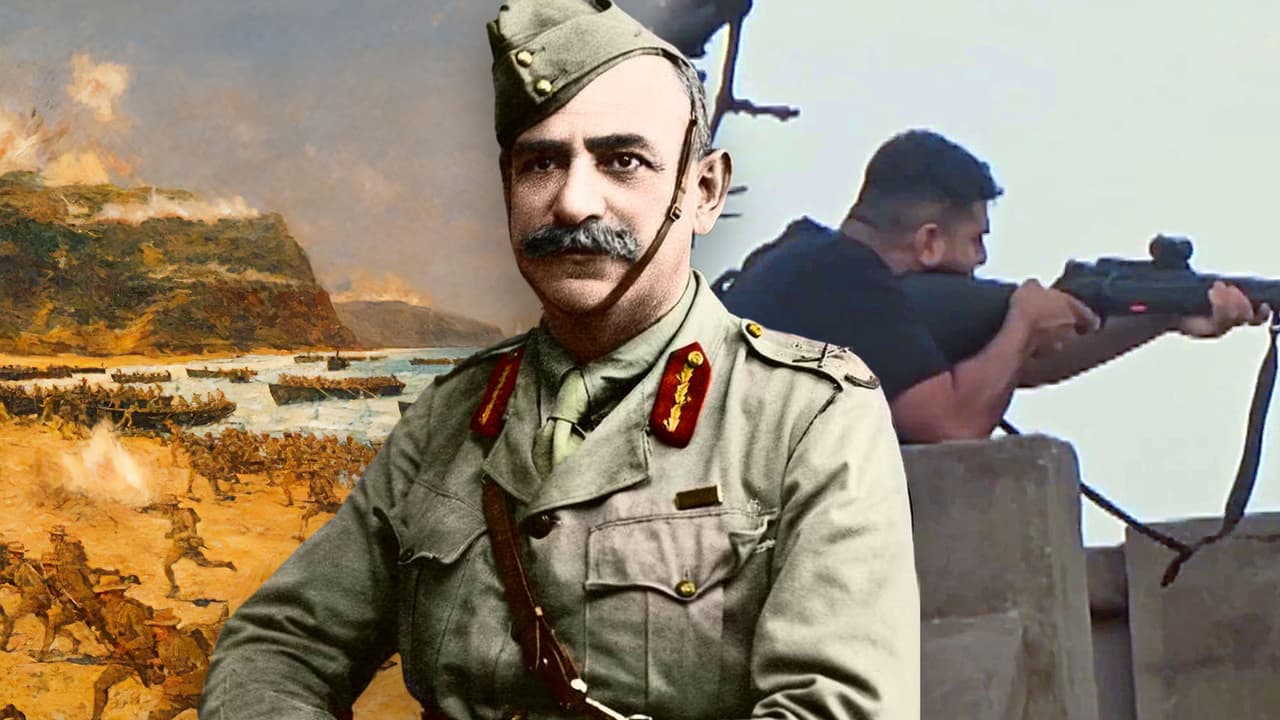
Sir John Monash … Bondi shattered the illusion. Illustration: The Australian
5:00AM November 23, 2026.
Updated 5:15AM November 23, 2026
Nearly a century ago, Jewish Australians embraced an extraordinary ambition: to restore Jewish sovereignty in their ancestral homeland after almost 2000 years. They chose one of Australia’s greatest figures, General Sir John Monash, as the movement’s first honorary president.
When he died, hundreds of thousands lined Melbourne’s streets. They honoured him as an Australian, knowing he was a proud Jew and a Zionist.
My mother was born in hiding in the last weeks of the war. For families like mine, Australia and Israel offered complementary promises. Australia offered refuge and opportunity. Israel meant the Jewish future would never again depend on the goodwill of others.
We flourished here and contributed, not as the price of belonging but because we belonged.
Growing up, I felt no conflict between being Australian, Jewish and Zionist. Australia never asked me to choose. I believed my children would inherit that Australia.
Last year, my 15-year-old son messaged me: “Dad, there are neo-Nazis marching through the city, and across the street protesters calling to globalise the intifada. I’ve been reading Auntie Eva’s book about surviving Auschwitz. It feels like the writing is on the wall. Do we really have a future here?”
To understand how we got from Monash to that message, I need to go back to October 7.
Six weeks after the Hamas attack, I walked through Kibbutz Nir Oz, where one in four members had been murdered or taken hostage. I had prepared myself for the horror but I had not prepared for the stories of courage.
Ben Shimoni, 31, escaped the Nova festival with a car full of people and drove them to safety. They begged him not to go back. He went back for more, and then went back again. He did not come home. Others did because he refused to leave them behind.
On that visit, a grieving Israeli mother learned I was Australian and showed me the statement of solidarity signed by six of our former prime ministers. I saw how much it meant to her. I was proud of Australia.
But at home something had changed. In universities, workplaces and cultural institutions, Jewish Australians were discovering that participation could come with conditions. Our connection to Israel became something to justify, apologise for or disavow.
Then Bondi shattered the illusion that distance could keep hatred at bay.
The sage Hillel taught: “In a place where no one is stepping up, strive to be the one who does.” Shimoni answered that call. Most of us will never face such a test. But we each face moments when silence is easier, when speaking will cost us something.
After October 7, this country faced many such moments. Some leaders stepped up. Not enough did, and antisemitism moved from the margins to the mainstream. So my message to our political leaders is this: condemning antisemitism after it occurs is not enough.
The test of moral leadership is whether you will challenge prejudice when it carries a political cost, including from your own supporters and colleagues, on the left or the right. Protect Jewish participation, not only Jewish security. Criticism of an Israeli government must never become delegitimisation of Israel.
Moral clarity is not moral simplicity. It requires us to hold more than one truth at once. Israel is militarily powerful and profoundly vulnerable. Palestinians have suffered terribly and Hamas remains evil. Israel can make grave mistakes and Jewish self-determination remains just.
Hillel’s challenge is also addressed to my own community. We are not responsible for the antisemitism we encounter but we retain agency over our response. We must not retreat from Australian life or from Israel. Fear must not make us insular, nor anger make us politically captive. Not every critic is an enemy, nor every apparent supporter a friend.
As the Zionist Federation of Australia marks its centenary and I hand over this responsibility, I have three hopes.
The first is for Israel: that the generation that has given so much to defend it can build its future in peace, and fulfil its founding promise of freedom, justice and equal rights.
The second is that our children’s Jewish identity will be shaped overwhelmingly by what they build, rather than by what they must defend against. We will protect our schools and synagogues as long as we need to. But those walls are not the purpose of Jewish life. The Jewish life within them is.
The third is for an Australia confident in its culture and values, one that expects us all to contribute but never makes belonging conditional on disavowing who we are. An Australia where it is unremarkable to be proudly Jewish, Zionist and Australian.
Monash embodied that confidence. I inherited it. I want our children to inherit it too.
My son asked whether we really have a future here. My answer is this: Australia is our home. We belong here. You belong here. We believe this country can live up to its best values, and we intend to help it do so.
This is an edited extract of the speech delivered by Jeremy Leibler as he completed eight years as president of the Zionist Federation of Australia.