Interview on SkyNews Australia’s Newsnight with Stan Grant, 19 March 2013.
ZFA President Philip Chester discusses Barack Obama’s first visit to Israel as President of the United States.
Continue reading

In the 5 years that Gilad Shalit was held kidnapped, the Zionist Federation of Australia led the campaign to maintain awareness of his situation in the minds of the Jewish community and the community at large. Abducted at the age of 19, Gilad Shalit and his story became personal to us and touched the hearts of many Australians – as parents, students, Zionists and humanitarians.
His release was a highlight for Israel and also for Australia’s Jewish community. Community solidarity was evidenced by events in Melbourne and Sydney at which hundreds of people spontaneously joined to watch the live footage together – and thousands more at home and at work following every report.

The price exacted for Gilad’s return was high, controversially so, with 1027 Palestinian terrorists released from Israeli prisons to secure the freedom of the one Israeli soldier. Ultimately, the decision of the government of Israel clearly demonstrated that the life of every individual soldier is sacred to the IDF, to Israel and to the Jewish people.

In the year since Gilad Shalit has been released, rare images and reports of him are emerging – resuming his life back in Israel and visiting countries where communities and governments rallied and lobbied for his release. He is still thin, still boyish looking – just as in the familiar photos we held on placards of him before his abduction. Yet the photos are much different: He’s smiling, he’s happy, he’s active – and, most importantly, he’s free.
Philip Chester
President, Zionist Federation of Australia
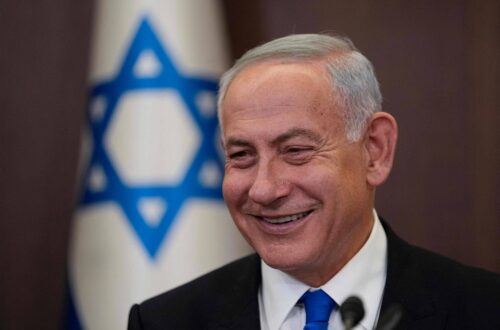
The Zionist Federation of Australia endorses FM Bob Carr’s reiteration of the Australian government’s support of a two-state solution, and it fully agrees that direct negotiations are absolutely necessary to make progress towards peace. Indeed Israeli PM Netanyahu’s offer to elevate the negotiations to direct talks between himself and Palestinian President Abbas, having made the significant concession of not insisting on Palestinian recognition of Israel as a Jewish state, underscores Israel’s commitment to progressing the process.
We believe that FM Carr’s focus on the issue of the settlements as an obstacle to peace distracts from the real issues which have precluded agreements to date – i.e. the unwillingness of the Palestinian Authority to enter into negotiations, coupled with ongoing Palestinian attacks on Israeli citizens and the promulgation of hatred in Palestinian education and media.
FM Carr noted correctly that trust and confidence are necessary for progress. Indeed these can only be built in the absence of hatred, and will be eroded by rocket fire from Gaza and violent attacks by Palestinians on Israel and its citizens.
The determination of borders, settlements and other final status issues are core to the peace process and can only be resolved as an outcome of the negotiations. Predetermined outcomes on these issues cannot, therefore, be preconditions to the negotiations.
From the early and optimistic Oslo process, through subsequent summits and meetings, Israel has always been and remains willing to negotiate for peace. The Israeli government and people are committed to achieving peace with their Palestinian neighbours. It is hoped that President Abbas will take up the offer of direct negotiations, without preconditions, as a first and important step towards peace.
Israel Prime Minister Benjamin Netanyahu has “cornered himself” by responding to Iran’s rhetoric but has failed to combat Israel’s most strained relation in the Middle East by staying mum in response to Turkey, said Tel Aviv University visiting professor and expert on Turkey and Middle East affairs Ehud Toledano.
As the final event during Toledano’s two-week visit across Australia organised by the Israel Embassy and supported by the Zionist Federation of Australia (ZFA), the professor briefed community leaders in Melbourne on 15 March, an event co-sponsored by the ZFA and Zionist Council of Victoria (ZCV).
“We don’t know how effective the (Iran nuclear) program will be,” Toledano said. “Ahmadinejad is not relevant to any decision making. He is a ridiculous buffoon and a bad person. He is not going to make the decision, and he is not going to push the button.”
Toledano concluded that both Iran and Turkey are attempting to enhance their influence in the region and across the world.
“Turkey and Iran are craving status,” Toledano said. “Turkey is doing it through bullying with its economic situation, and Iran wants to do it through its nuclear capabilities.”
In the rest of the Arab World, he is “cautiously optimistic.”
“When free elections occur, Islamic parties succeed,” Toledano said. “They like faith in their politics. All of the parties that have won power are the moderates – they may not seem moderate to the outside world, but they have to be in order to stay in power.”
Toledano’s remarks surprised many of the community leaders in their variance from most of the current news analysis. But the community leaders appreciated Toledano’s viewpoint.
“Professor Toledano brought us a totally different perspective on matters that are of great concern to Jews everywhere. His analysis challenged conventional thinking in a way that was both confronting and enlightening. The Zionist Council of Victoria and the Zionist Federation of Australia are proud to be able to present esteemed experts to the Australian community” said ZCV President Sam Tatarka.
ZFA President Philip Chester said: “He urged great caution in making decisions on what to do with Iran because of the implications of any step against them. He felt that relations between Israel and Turkey are the most negative aspect of what is happening in the Middle East and in need of the most work to repair.”
19 March 2012